
How Mystery Stories Help Kids Become Better Readers
Mystery stories can help kids become stronger readers by building curiosity, attention, prediction skills, vocabulary, and confidence. Here’s why clean middle grade mysteries are a great choice for young readers.
MIDDLE GRADE KIDS
T.L. Lolley
6/24/20264 min read
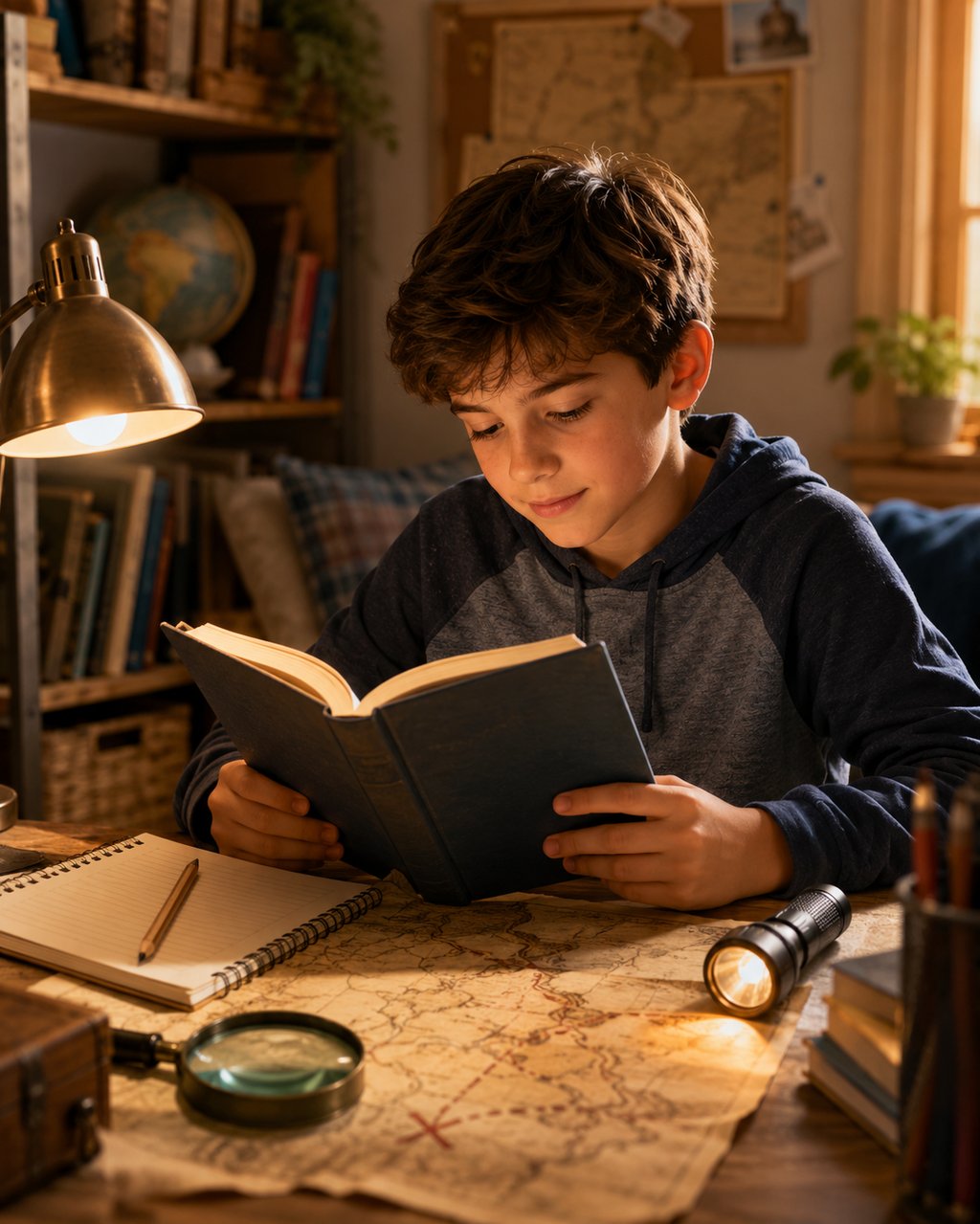
Some children fall in love with reading right away. Others need a reason to keep turning the page.
That is one of the reasons mystery and adventure stories can be so helpful for young readers. A good mystery gives a child something to chase. A clue appears. A question opens. Something does not quite add up. Before long, the reader is not only reading words on a page. They are trying to solve something.
When children read a mystery, they are not just waiting for the story to end. They are participating in it. They are watching for details, remembering what happened three chapters ago, testing guesses, and asking, “What did I miss?”
That kind of reading can build more than entertainment. It can help children become more attentive, thoughtful, and confident readers.
Mystery Gives Kids a Reason to Pay Attention
A mystery story naturally teaches children that details matter. The old map may not just be an old map. The strange mark on the stone may not be random. The comment from the quiet character may turn out to mean something later.
Young readers begin to notice that stories are built carefully. They learn to slow down enough to catch clues. They start paying attention to setting, dialogue, objects, motives, and small changes in the plot. That is good reading practice.
Plenty of children can technically read the words on a page but still drift through a story without holding much of it together. Mystery stories gently push against that. They invite the reader to stay alert.
A child may not think, “I am practicing close reading.” They are just trying to figure out who left the note, where the tunnel leads, or why the old journal matters.
But that is part of the beauty of it. The learning happens inside the adventure.
Mystery Builds Prediction Skills
Good readers make predictions. They ask themselves what might happen next. They notice patterns. They adjust their guesses when new information appears.
Mystery stories make this process feel natural.
A child might think one person is responsible, then change their mind after a new clue appears. They might suspect that a place, object, or memory is more important than it first seemed. They might notice that the story is pointing them in one direction while quietly hiding another possibility.
That is active reading.
Prediction helps children engage with the story rather than passively move from page to page. It also teaches them that being wrong is part of the process. A wrong guess does not mean they failed. It means they are thinking. That is a helpful lesson for readers and it is also a helpful lesson for life.
Mystery Helps Kids Remember What They Read
Mystery stories often reward memory. A clue from chapter two may matter in chapter ten. A small detail from the beginning may suddenly make sense near the end. A character’s earlier words may come back with new meaning.
This encourages children to hold pieces of the story in their minds and connect them later.
That kind of reading strengthens comprehension. Children learn that a book is not just a series of separate scenes. It is a whole story, and the pieces belong together.
For a reluctant reader, that can be especially helpful. A mystery gives them a reason to remember. They want to know whether their guess is right. They want to see how the pieces fit. The story becomes a puzzle, and the reader has a role in solving it.
Mystery Gives Reluctant Readers Some Momentum
Some children do not dislike reading as much as they dislike being bored. A clean, age-appropriate mystery can help because it creates momentum. The end of a chapter naturally raises a question. A clue invites the next page. A discovery makes the reader want to know what comes next.
For children who struggle to finish books, a mystery can provide a stronger reason to continue. They are not just reading because an adult told them to. They are reading because the story has placed a question in their hands. That can be a turning point.
One finished book can give a child confidence. A second finished book can begin to change how they see themselves.
“I don’t like reading” can slowly become “I like this kind of reading.” And that is worth paying attention to.
Mystery Encourages Conversation
Mystery books are also fun to talk about. Parents and grandparents can ask simple questions without making the book feel like homework.
“What do you think the clue means?”
“Who do you trust so far?”
Were you surprised by the ending?”
Those questions help children explain their thinking. They also let adults see how the child is understanding the story. And honestly, those conversations can be fun.
There is something special about a child leaning over a book and saying, “Wait, I think I know what’s happening.” That moment is not just about reading. It is about curiosity waking up.
At its best, reading is not only a school skill. It is a way of discovering. Mystery stories make that easy to see. For many kids, that is exactly the kind of reading experience they need.
Where the Eli Calloway Mystery Books Fit
The Eli Calloway Mystery books from Poplore Press are written for readers who enjoy clues, maps, family secrets, old places, and clean adventure. You can read more about the book HERE.
Eli’s world is built around curiosity. He pays attention. He asks questions. He notices details other people might miss. He follows clues into places where the past and present begin to connect.
That makes the series a good fit for middle grade readers who need a story with movement, mystery, and heart.
It is also a good fit for parents and grandparents looking for a clean adventure book that can keep a child turning pages without relying on content that feels too old for them.
If the young reader in your life likes puzzles, hidden clues, outdoor adventure, old journals, family history, or the feeling of “just one more chapter,” the Eli Calloway Mystery books may be a good place to start.
Final Thought
Mystery stories help kids become better readers because they make reading active. Children are not just following along. They are noticing, guessing, remembering, questioning, and connecting details.
That is the kind of reading that grows stronger over time. So if you have a child who needs a little more reason to read, try giving them a mystery. Not because it feels educational. Because it feels like an adventure.
And sometimes adventure is what helps a reader begin.
Poplore Press
Independent Self-Publisher
Contact
Stay informed
tlolley@poplorepress.com
© 2026. All rights reserved.