
How to Choose a Faith-Based Children’s Book for the Kids in Your Life
Looking for a faith-based children’s book for a child or grandchild? Here are simple ways to choose stories that are warm, age-appropriate, and rooted in faith without feeling forced.
CHILDREN'S BOOKS
PopPop
5/20/20265 min read
Choosing a book for a child sounds easy until you are standing in front of a shelf or scrolling through page after page online.
You want something meaningful.
You want something they will actually enjoy.
You want it to be faithful without feeling stiff.
You want a story that does more than fill a few minutes before bedtime.
And if you are a parent, grandparent, aunt, uncle, Sunday School teacher, or family friend, you may also be hoping the book does something gentle and lasting. You want it to help a child think about God, family, courage, kindness, fear, love, forgiveness, or prayer in a way they can understand.
Children’s books have a way of getting past the front door. A good story can sit beside a child on the couch, ride along in the car, land on the nightstand, and become part of the way they remember love and faith later.
So how do you choose a good faith-based children’s book?
Here are a few things to look for.
Start with the Child, Not Just the Message
It is easy to begin with the lesson. We may think, “I want a book that teaches courage,” or “I want something about prayer,” or “I need a book that explains God’s love.” That is not wrong. But a children’s book still has to meet the child where they are.
A four-year-old does not need a lecture on courage. They need a story where someone feels afraid and discovers they are not alone.
An eight-year-old may not want a book that talks down to them. They may want a story with a little mystery, humor, or emotional honesty.
A child dealing with change may not need a perfect answer. They may need a gentle story that gives them words for what they are feeling.
Before choosing the book, think about the child.
What do they enjoy?
What are they facing right now?
Do they like funny stories, quiet stories, adventure, animals, family stories, mysteries, or books with lots of pictures?
Are they asking big questions?
Are they going through something tender?
A good faith-based book does not only deliver a message. It connects with the child in front of you.
Look for a Story, Not Just a Sermon
This may sound odd coming from a faith-based publisher, but children usually do not need every book to preach at them. They need stories.
A good Christian children’s book can teach faith without sounding like a miniature sermon. It can show love, patience, forgiveness, courage, trust, and prayer through characters, choices, and moments children recognize.
That does not mean the faith element should be hidden. It means it should feel natural inside the story. Children can tell when a book is only pretending to be a story so it can sneak in a lesson. Adults can too.
The best faith-based children’s books usually have a real emotional center. Something happens. Someone feels something. Someone learns, grows, remembers, or responds. The child reading it has a reason to care. A good question to ask is: Would this still be a good story even if I did not know the lesson ahead of time?
If the answer is yes, you are probably holding a stronger book.
Choose Books That Feel Warm, Not Heavy
Children can handle serious subjects, but the weight has to be carried carefully. For example, a book about fear should not make a child feel more afraid. A book about faith should not make every problem feel easy. Warmth matters.
Look for books that leave space for a child to feel, wonder, and ask questions. Good faith-based books do not have to tie every issue into a perfect bow. Sometimes the better ending is simple reassurance: God is near, family love matters, prayer is welcome, and we can take the next step.
That kind of warmth helps children trust the story.
Pay Attention to the View of God
This is one of the most important things to consider. A faith-based children’s book is not just teaching a child a moral. It may also be shaping how that child thinks about God.
Does God come across as loving, holy, near, wise, and trustworthy?
Does the book treat Scripture carefully?
Does it avoid making promises the Bible does not make?
Does it show faith as something woven into real life, not only church life?
Children are forming categories long before they can explain them. A book that says “God loves you” in a gentle, clear way may stay with a child for years. A book that presents God mostly as disappointed or distant can stay with them too.
Choose books that help children see God’s care without flattening the hard parts of life.
Match the Book to the Moment
Not every book has to do the same job. Some books are good for bedtime, some to read aloud, some are good for Sunday afternoon quiet time, and others are good for a child who likes to color, draw, or process feelings through activity.
A picture book may be best when a child needs closeness and story. A coloring or activity book may be better when a child needs something hands-on and calming. A slightly older reader may enjoy a chapter book or middle grade story that includes faith, family, courage, or mystery without feeling too young.
The right book is not always the fanciest one. It is the one that fits the child and the moment.
Read a Few Pages Before You Decide
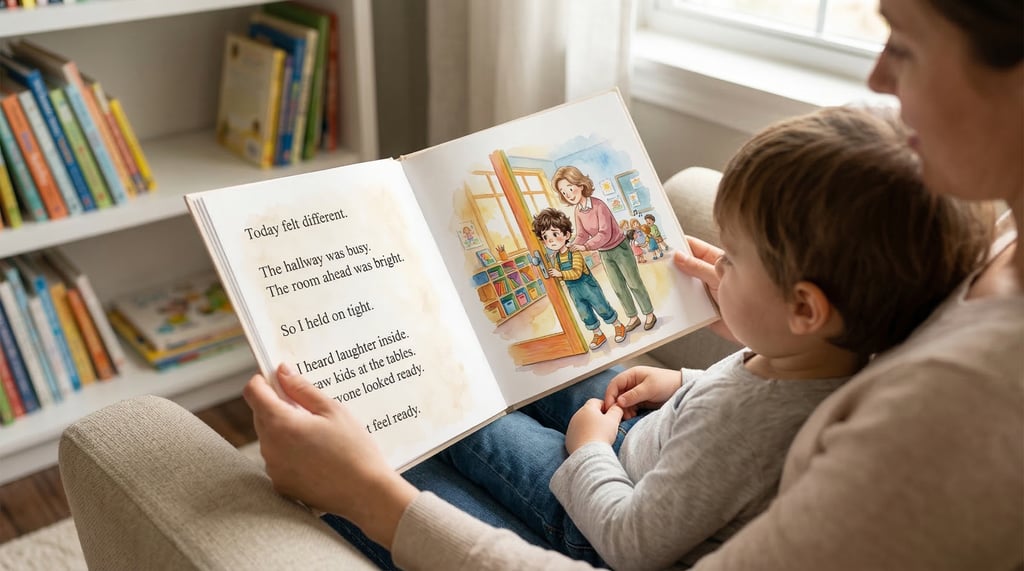
If possible, preview the book. Read the first few pages. Look at the illustrations. Listen to the rhythm of the language and ask whether it sounds like something a child would want to hear again.
Children often ask for the same book many times. That is one reason quality matters. If a story is too clunky, too forced, or too wordy, it may not make it past one reading. A good read-aloud book usually has:
Clear language
A warm rhythm
Pictures that support the story
A message children can understand
Enough heart to make rereading pleasant
You do not need the book to be perfect. But you do want it to feel sincere.
Think About the Conversation After the Story
One of the best parts of reading with children is what happens after the last page. A good faith-based children’s book can open the door to a simple conversation. You might ask:
“What part did you like best?”
“Have you ever felt like that?”
“What do you think the character learned?”
“Where did you see God’s love in the story?”
“What would you have done?”
These do not need to become long teaching moments. Sometimes one question is enough. Children often process truth slowly. A story may give them language they use later, when they are ready.
That is one reason books make such meaningful gifts. You are not only giving a child something to read. You may be giving them a conversation they need.
Where PopPop’s Books Fit
At Poplore Press, the PopPop books are written with this kind of heart in mind. They are meant to feel warm, approachable, and rooted in faith without sounding stiff or preachy. They are for families who want stories that help children see God’s love in everyday moments, process big feelings, and enjoy time with someone who cares enough to read with them.
If you are looking for a faith-based children’s book for a child or grandchild, you may enjoy exploring:
PopPop’s Faith Adventures
Gentle picture books that help children connect faith with family, love, and everyday life.
When I Feel… books and activities
Resources for children who are learning to name big feelings and remember God’s care in the middle of them.
Each book is created with the hope that reading together can become more than a routine. It can become a small moment of connection. And maybe, without forcing anything, a little more room to talk about faith.
Final Thought
Choosing a faith-based children’s book is not about finding the most impressive book on the shelf. It is about finding a story that fits the child, honors the faith you want to pass along, and opens a door for warmth, trust, and conversation.
Look for books that feel honest. Look for stories children can enter. Look for faith that sounds like good news, not pressure. And when you find one, sit down and read it with them.
That may be the part they remember most.
Poplore Press
Independent Self-Publisher
Contact
Stay informed
info@poplorepress.com
© 2026. All rights reserved.